low prices every day



 Aga24.eu

/cart.svg)
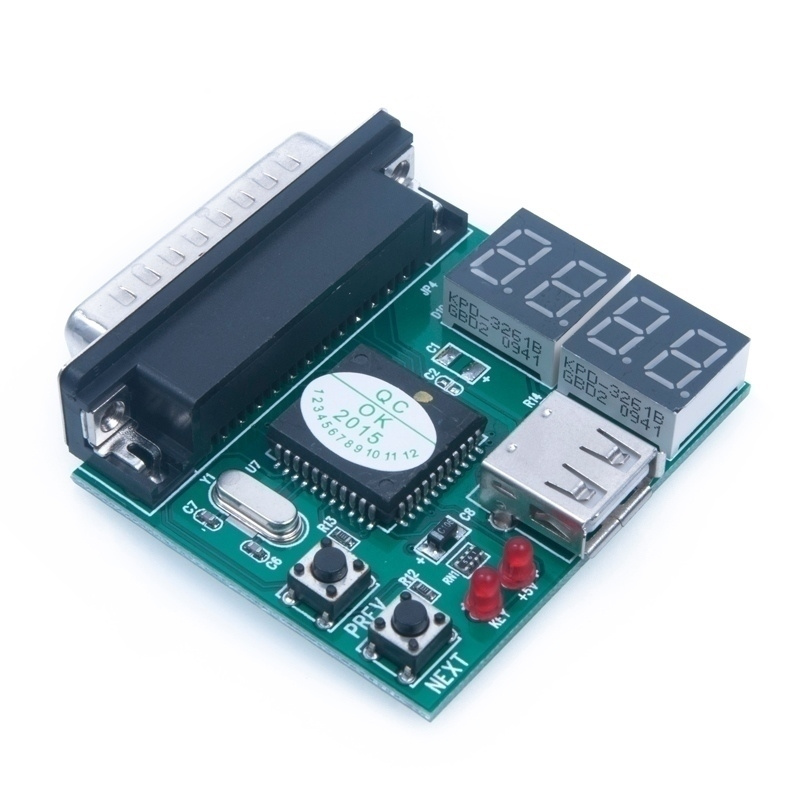
K457 USB LPT DIAGNOSTIC CARD
Code: i707_K457


K457 USB LPT DIAGNOSTIC CARD
A diagnostic card is a device that checks the proper functioning of a PC and locates any faults.Upon connection or reset, each computer performs a series of tests (P.O.S.T. - Power On Self Test) to verify the proper functioning of its most important modules.The processor, RAM, and input-output circuits are being tested., memory controllers, disks, etc. Additionally, the POST card includes LEDs that monitor the computer's power supply voltages: +12V, -12V, +5V, and -5V.The POST mechanism works by having the computer's BIOS write the module's number to memory at the 80h I/O port address before checking the given module. After the module is successfully tested, the next device is tested. However, in the event of an error, the system halts operation. The task of the POST card is to capture and display the number of the malfunctioning module on the LED display in a 2-digit format. The value of the POST code can then be checked in the POST code table for the given version and BIOS manufacturer (visible at system startup or on a sticker on Award, AMI, Phoenix BIOS) to determine which system module is malfunctioning.
Parameters
Code:
i707_K457
Status:

Fast delivery
From ordering 24 h

Customer service
Mon-Fri: 9am-3:30pm

Secure payment
is our priority

Special offers
Discounts up to 50%

Verified company
More than 10 years on the market

Satisfied customers
300 000+ orders